

A portfolio is a useful starting point, but it only shows part of the picture. Before appointing an architect, you should also understand how they investigate your site, work with your budget, coordinate approvals, and respond when questions arise during the build.
If you are considering how to choose an architect on the Sunshine Coast, these are the things worth looking for and the questions worth asking.
At Morriarchi, we encourage homeowners to explore both the design approach and the support available at each stage before making their decision.
The Short Answer: How Do You Choose a Good Architect?
Choose an architect with relevant Sunshine Coast experience, clear communication, and a written proposal that explains their fees and responsibilities. The portfolio helps you shortlist. The proposal and the first conversation help you decide.
Before you appoint a practice, check:
- Their experience with homes or sites similar to yours
- Their knowledge of local council and planning requirements
- Their registration to practise
- How they plan to work within your budget
- Their service coverage for documentation, contractor selection, and contract administration
What to Look for in a Sunshine Coast Architect

The strongest signs of a good architect often become clear in your first conversations. Look for someone who listens carefully, explains their thinking, and can connect the homes in their portfolio with the decisions that made them possible.
Experience with projects like yours
The most useful experience is usually the closest match to your site and brief. A waterfront home, an existing house that needs substantial changes, and an extension each call for different skills, so match the work to your own situation.
Ask the architect to walk you through one relevant project. What did the owners want? Which constraints shaped the design? What problems came up, and how were they handled? The answers will show you more about their judgement than photographs can.
Local knowledge
Sunshine Coast conditions change the design, and an architect should be able to talk about them specifically. On a beachside block in Mooloolaba, the questions are about shade, airflow, privacy, and exposure. On a sloping property around Buderim or in the hinterland, the questions are about access, drainage, and changing levels.
A good architect does not treat these as technical problems to solve in isolation. They connect the site conditions to how you live, which is what makes the design work day to day.
Council and planning
Planning requirements can limit where a home sits, how tall it can be, and how it is built. A good architect checks these early, while the design still has room to change.
Ask how they check zoning, overlays, and approval requirements. Sunshine Coast Council’s Development site report gives property-specific planning information. Noosa Shire has its own planning scheme, the Noosa Plan 2020, so confirm the correct council using the property address rather than the suburb name.
You should also know who will coordinate planning applications, consultant advice, and building approval documentation, and when a town planner, engineer, or private building certifier is likely to be needed.
Professional registration
Check the individual’s registration on the Board of Architects of Queensland register. Confirm they are registered to practise. Registration is the starting point, not the whole decision. Once it is confirmed, assess their relevant experience, communication, and scope of service.
Fees and what they include
A fee on its own tells you little. Ask for a written proposal that sets out the stages included, the deliverables at each stage, the exclusions, and any additional charges.
Two proposals can look similar while covering different work. One may end with approval drawings, while another includes detailed construction documentation, help selecting a builder, and contract administration.
Compare the proposals on the same scope. Check that each fee is stated clearly, and confirm if it includes GST. Consultant and application fees are often charged separately, so ask for those to be listed too.
Budget
Ask when construction costs will be checked and who will provide cost advice. Ask what happens if the design goes over the amount you want to spend.
On a sloping site, excavation, retaining, and site access can change the cost significantly. On an exposed coastal property, material choices and detailing affect both durability and maintenance.
Your budget should also cover landscaping, consultant fees, approvals, and contingency. A good architect will talk openly about trade-offs, such as reducing floor area or simplifying the building form, rather than promising everything within a fixed number.
Communication and personal fit
Pay attention to how the architect listens. Do they ask about your daily routines, how your household spends time together, and what you hope the home will make easier? Do they explain their ideas clearly and leave room for your response?
Confirm who will lead the project, how updates will be shared, and how changes are agreed. Ask past clients how the architect communicated when problems came up. You are choosing a working relationship that may last several years, so it should feel clear and respectful from the start.
A Local Example: Minyama Island Residence
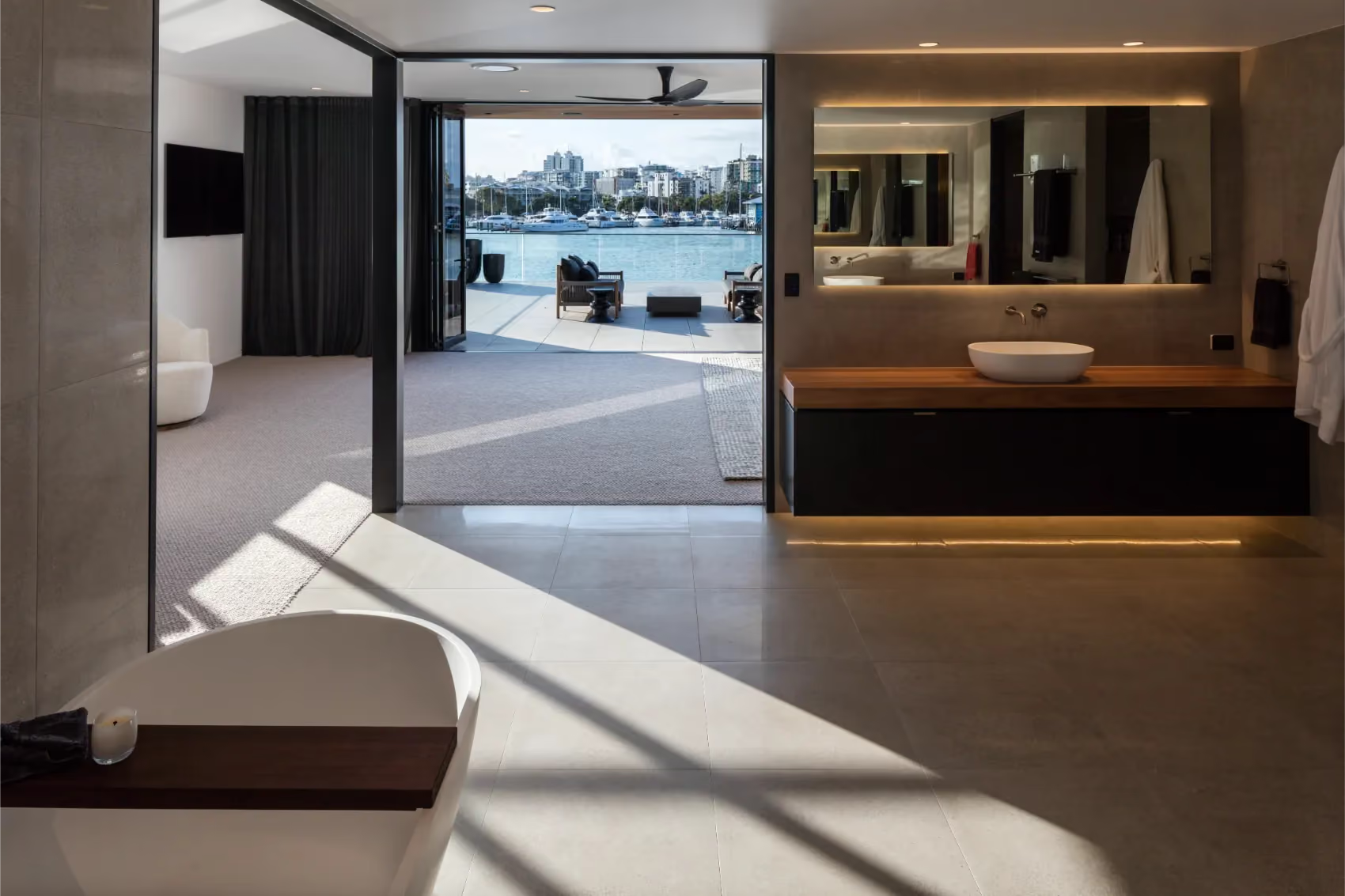
Our Minyama Island Residence shows why it helps to ask an architect to explain the reasoning behind a completed home.
The waterfront site was exposed and flood-affected, with views across the Mooloolah River and towards Mooloolaba Wharf. The principal living and bedroom spaces were positioned to take advantage of those views.
Large openings let cooling breezes move through the home. Cantilevered balconies shade the spaces below. The residence is raised on a pool and terrace podium, which responds to flood exposure and reconnects the lower landscape with the river’s edge.
When you review a project like this, ask how the architect brought the site, engineering, and household needs together. That conversation will show you how well their experience suits your land and brief.
How Far Will the Architect Stay Involved?
Before appointing an architect, establish where their service begins and ends.
Ask each shortlisted practice if its proposal includes:
- Concept design: exploring the layout, form and relationship between your brief and the site.
- Design development: refining the preferred design, materials and technical decisions.
- Town planning: identifying planning matters and coordinating the required application information and specialist advice.
- Construction documentation: preparing detailed drawings and specifications, with consultant coordination.
- Contractor selection: helping assess builders, tender submissions, inclusions and exclusions.
- Contract administration: administering the building contract during construction within the agreed appointment.
Morriarchi stays involved from concept through contract administration, so the thinking you approve at the start carries through to the finished home.
If an appointment ends before construction, establish who will answer design questions and assess proposed changes during the build.
Why Support During Construction Matters
Questions can arise even when a design has been carefully documented.
An existing condition may differ from expectations. A specified product may become unavailable. A builder may suggest a substitution that affects the appearance, performance or detailing of the home. Continued architectural involvement provides someone familiar with the design to help assess those decisions.
Morriarchi’s contract administration service includes regular site visits, assessment of the builder’s work, management of variations and certification of payments, subject to the applicable contract and appointment.
The builder remains responsible for managing construction day to day. The architect’s contract administration role provides an agreed process for assessing progress, changes and contractual matters.
Ask what site visits cover, how frequently they are planned and what support is available between visits.
Questions to Ask Your Shortlisted Architects
Bring the same brief and questions to each practice:
- Have you completed a project with a similar site, scope, or budget?
- What would you investigate first on my property?
- Who will lead the design, and who will be my main contact?
- Which stages does your fee proposal include?
- When will construction costs be checked?
- How do you help me select a builder and compare their proposals?
- What is your role during construction?
- How are revisions and additional fees agreed?
- Can I speak with a client whose project you supported through construction?
Look for specific answers, relevant examples, and clearly defined responsibilities. The first meeting should give you a clearer picture of both the architect and the work ahead.
Choosing The Right Architect For Your Project
The right architect depends on your land, your priorities, your budget, and how involved you want them to be. Morriarchi has more than 20 years of experience and has delivered hundreds of projects across residential, multi-residential, and commercial work.
We stay involved from the first concept through to contract administration. Our service covers design development, town planning, documentation, and contractor selection along the way, so the decisions you approve early are the ones that get built.
Whichever practice you choose, look for relevant experience and a working relationship where you feel heard and well informed.
Frequently Asked Questions
How Do I Know If an Architect Is Right for My Project?
Look for relevant completed work, clear communication and a service proposal that matches the support you need. Ask how the architect would investigate your site and approach your brief. References from clients with comparable projects can help you assess the working relationship.
Should I Choose the Architect with the Lowest Fee?
Compare the scope before comparing the price. Check the stages, deliverables, exclusions and construction involvement covered by each proposal. A fee is easier to assess when you know which responsibilities it includes and what may be charged separately.
Will My Architect Handle Council Approvals?
This depends on the agreed appointment. Ask who investigates planning requirements, prepares application information, and coordinates relevant consultants and the building certifier. Confirm these responsibilities in the written proposal.
Do All Architects Offer Contract Administration?
Check each practice’s services and proposal individually. Ask whether contract administration is available, what it includes, and how it is charged.
Start with a Conversation About Your Project
We want to hear about your project. Tell us about the site, what you hope your home will do for you, and roughly what budget and timing you have in mind. We’ll talk through what needs investigating first and how much architectural support will suit your home.